The Customer Effort Score (CES) is a customer experience metric that measures the level of effort a person must make to complete an interaction with a company. It can be about resolving an incident, making a purchase, managing a return, hiring a service, or looking for information. Its objective is to determine to what extent processes are simple, fluid, or, on the contrary, generate unnecessary friction.
The logic behind CES is simple: the less effort an interaction requires, the more likely it is that the customer will come back, maintain a long-term relationship with the brand, and positively value the experience received. On the other hand, when processes are complex, require information to be repeated, or require multiple steps to reach a solution, satisfaction and loyalty often deteriorate.
Due to its ease of implementation and the clarity of the data it provides, the Customer Effort Score has become one of the most widely used metrics to identify obstacles within the customer journey and prioritize operational improvements with a direct impact on the customer experience.
How is the Customer Effort Score measured?
The measurement of the ESC is usually carried out through brief surveys sent after a few hours of a relevant interaction, since this moment allows a fresh and accurate perception of the experience to be collected.
To do this, a direct question is usually used, such as: “What level of effort did you have to make to solve your request?” The question may vary slightly depending on the aspect to be measured, but in any case the answers are usually one of the following scales:
- The Likert
scale It is presented on a 5-point scale ranging from a negative to a positive extreme, with a neutral intermediate point:
1. Strongly disagree
2. Disagree
3. Neither agree nor disagree (Neutral)
4. Agree
5. Strongly agree
- Numerical
scale This is one of the most widespread methods. Users rate interaction on scales of 1 to 5 or 1 to 7 points. Generally, higher scores indicate a simple and low-effort experience.
- Visual
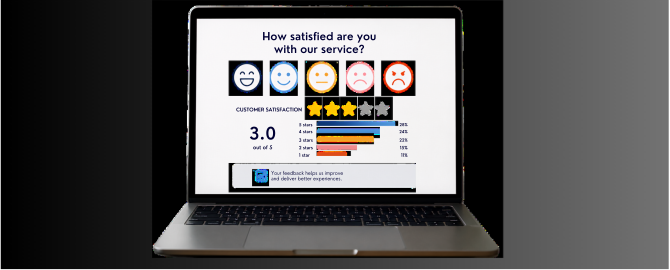
scales Surveys based on icons or emojis simplify participation and often result in better response rates, especially on mobile devices. They are useful when looking for speed and an intuitive response experience.
Get the value of the Customer Effort Score
There are different ways to calculate CES according to the objectives of each organization.
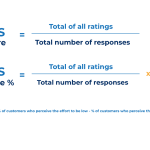
The most common method is to obtain the average of all the responses received. The higher the score, the lower the effort perceived by customers.
Some companies opt for percentage systems that compare positive and negative responses to generate an aggregate indicator. This approach makes it easier to observe trends and compare periods of time. Depending on the scale chosen, it is determined which values represent low effort and which represent high effort. The percentages of both responses are then subtracted.
Why is it important to measure the Customer Effort Score?
Consumer expectations have changed. Speed is still important, but today customers especially value the ease with which they can reach a product or access a service, and the plus that few companies are incorporating is the level of personalization of the experience.
CES allows you to detect points of friction because it analyzes a specific and recent experience. Instead of asking about the general perception of a brand, it focuses on a specific interaction and the effort it has required.
This metric is usually complemented by other indicators widely used in customer experience programs:
- Net Promoter® Score (NPS):® measures how likely a customer is to recommend the company to others and serves as an indicator of loyalty.
- Customer Satisfaction Score (CSAT): Assesses the level of satisfaction after a specific interaction, such as a purchase or customer service inquiry.
- Net Emotional Value (NEV): measures the emotion behind the customer’s response, and is precisely the metric that best complements any other, as it provides the emotional “why” that numbers alone do not explain.
Using each of them at the right time allows you to have an assessment of all the customer journey points that provide valuable information to implement improvements throughout the process.
The Role of CES in AI-Powered Customer Service
The incorporation of artificial intelligence in customer service departments has increased the relevance of the Customer Effort Score. AI-based assistance tools have managed to reduce management times and automate tasks that previously required human intervention, but that efficiency gain does not always translate into a simpler experience for the customer.
If AI is implemented in poorly integrated processes, frictions can arise such as repetition of information, channel changes without context, or chatbots unable to solve complex queries. Even if service times improve, the customer may perceive that they must make a greater effort to obtain a solution.
For this reason, CES has become a particularly valuable metric for evaluating automation and digital transformation projects: while indicators such as average resolution time or automation rate reflect the organization’s internal performance, the Customer Effort Score provides a vision focused on the real customer experience.