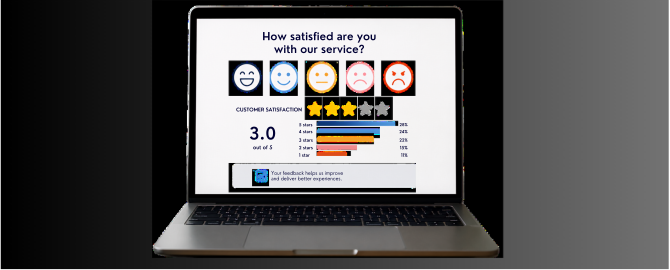
The Customer Satisfaction Score (CSAT) is a metric that measures how satisfied a customer is right after a specific interaction with a company.
Unlike other metrics, such as NPS,® the CSAT methodology does not have a standard question, although it is true that it is always asked about their degree of satisfaction.
Some examples of this question could be:
- How satisfied are you with your recent experience?
- How satisfied are you with our customer service?
- How satisfied are you with the product you have purchased?
The answer can be collected using scales of 1 to 5, 1 to 7, 1 to 10, stars, emojis or any other rating system. Regardless of the format chosen, it is essential to establish a single criterion to determine which answers are considered satisfactory. Maintaining that consistency ensures a correct CSAT calculation and allows you to compare results consistently.
How is CSAT calculated?
The CSAT calculation is straightforward. It is obtained by dividing the number of satisfied customers by the total responses received and multiplying it by 100 to obtain a percentage.
The higher that percentage, the higher the level of customer satisfaction with that particular interaction.
Precisely because of its simplicity, CSAT allows you to quickly detect if a process is working correctly or if it needs improvements.

When should you use CSAT?
CSAT delivers its greatest value when sent right after an important interaction. Waiting too long can cause the customer to forget relevant details or mix that experience with later ones.
Some of the moments where it is especially useful are:
- After a purchase or a delivery. Especially in ecommerce or logistics services.
- When closing a support ticket or ending a call. When the customer still remembers perfectly how the service has been.
- After a return or exchange. Good management can regain customer trust even after an incident.
- At the critical points of the customer journey. Those moments that have a greater impact on the overall perception of the service.
Measuring these moments allows you to quickly identify which processes are working well and which ones generate dissatisfaction before they affect loyalty.
How is CSAT different from other metrics?
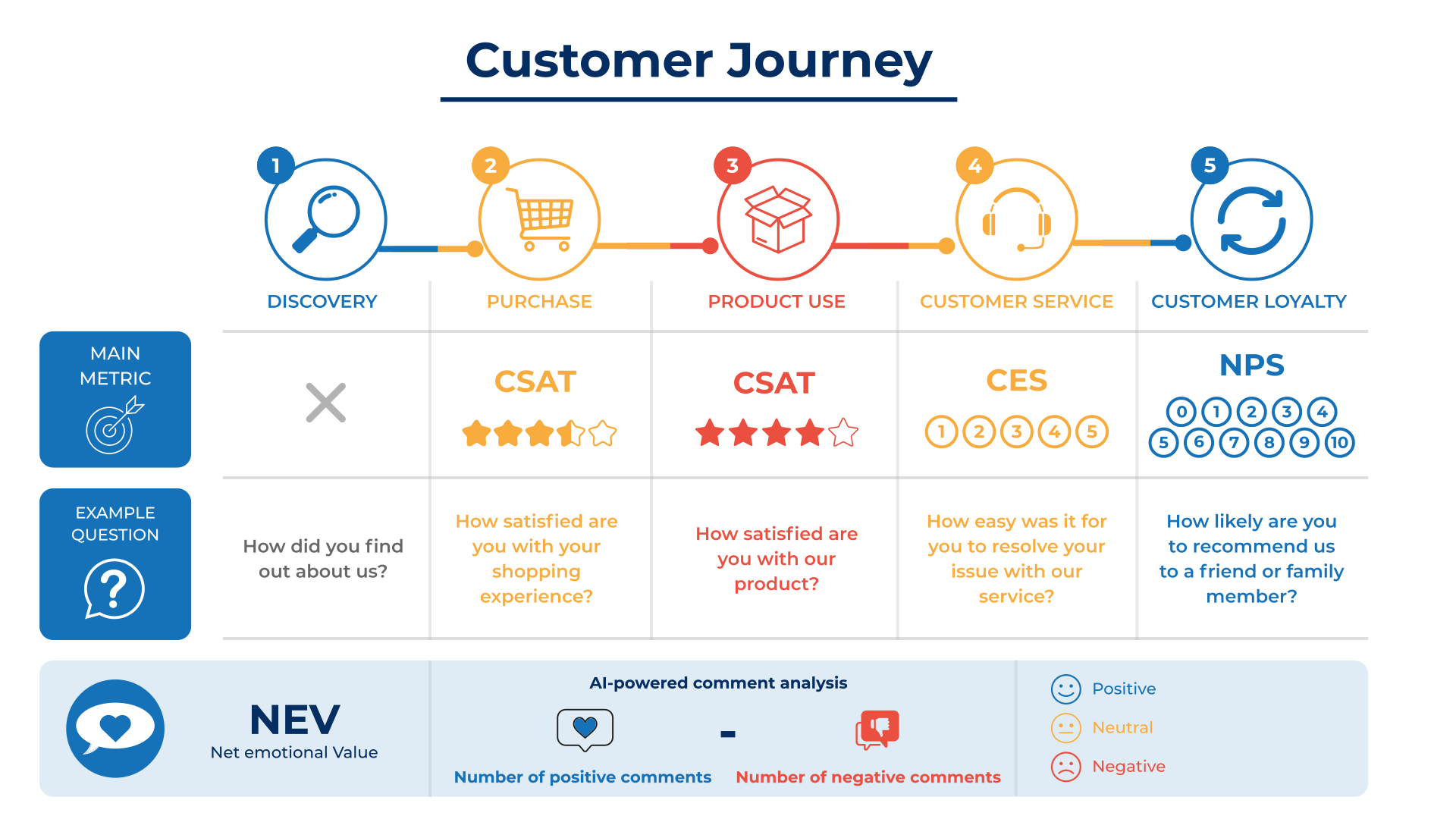
It’s common to combine CSAT with other customer experience indicators, as each one answers a different question.
- The Net Promoter Score, or NPS®, measures the probability that a customer will recommend our product or service. It does not talk about a specific interaction but about the relationship as a whole, about the global perception that the customer has after everything they have experienced with the brand. It is a relational and long-term metric.
- The Customer Effort Score (CES) analyzes the effort that the customer has had to make to complete an action or solve a problem. The lower the effort, the better the experience.
- Net Emotional Value or NEV goes a step further and analyzes the emotional dimension of experience. It not only identifies whether the customer was satisfied, but also how they felt during the interaction.
- CSAT, on the other hand, answers a much more specific question: has the customer been satisfied with this specific moment?
That’s why these metrics don’t compete with each other, but complement each other to offer a much more complete view of the customer experience.
The Most Common Mistake When Measuring CSAT
CSAT is a tool for listening, not improvement; That’s why it’s important to have an action plan to improve everything you’ve measured. And although this explanation seems obvious, in practice it is often forgotten.
A simple way to get more out of it is to accompany the punctuation with an open-ended question, for example:
What could we have done to improve your experience?
These answers usually contain the most valuable information: waiting times, communication problems, difficulties with a process or even aspects that the company had not even detected.
When you start reading those answers, you will see that the score alone falls short, because behind the same grade there can be very different reasons. It is in the comments where the customer really explains what happened, and that is why it is advisable to rely on the NEV to analyze them, since it allows you to understand how each person felt beyond the number they dialed.
This way you will not only know what score your customers give you, but also what is behind it, and with that information you can start making decisions and improving what really matters to them.
At Opinat, we help companies combine metrics such as CSAT, NPS®, and Intelligent Feedback Analytics (NEV) to gain a complete view of their customers’ experience and turn every response into an opportunity for improvement.