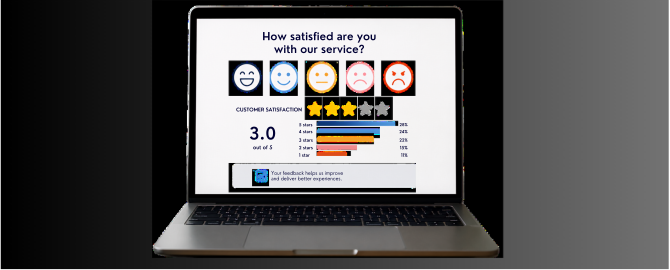
Not all dissatisfied customers act the same. Some simply stop buying. Others, in addition, tell their bad experience to other people. This second group, the NPS® (Net Promoter Score®) methodology, calls it a detractor customer.
Understanding why a customer becomes a detractor is the first step to detecting friction points and improving the customer experience with real data, not assumptions.
What is a detractor customer?
A detractor customer is one who has had a negative experience with a company, product, or service and shows a low level of satisfaction. As a result, they are unlikely to buy again or recommend the brand to others.
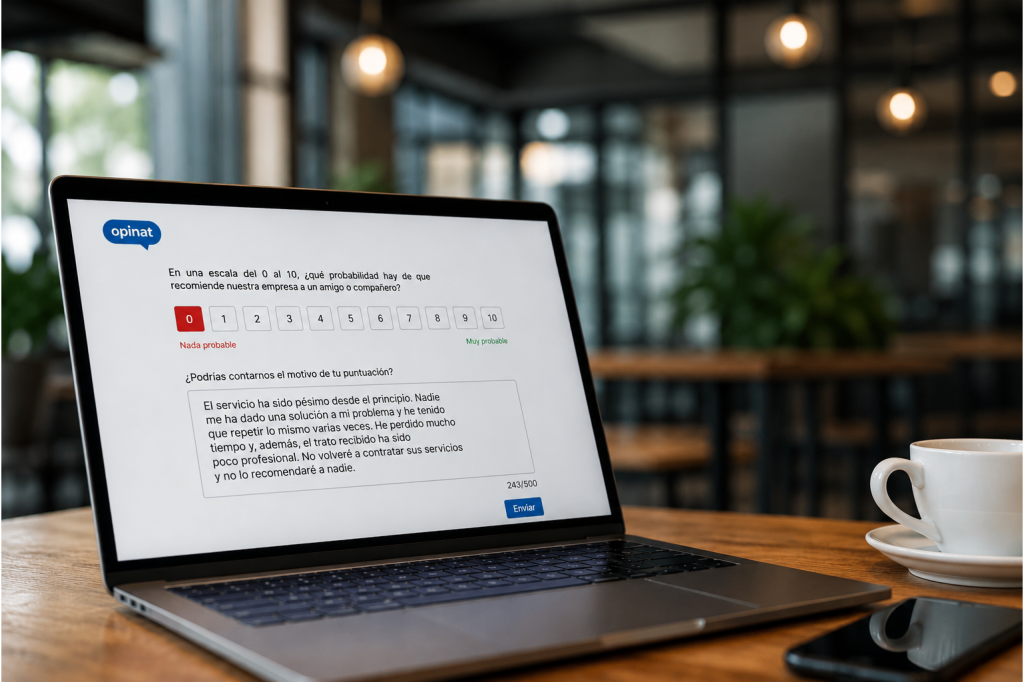
Within the NPS® methodology, a customer is considered a detractor when they answer the question with a score between 0 and 6:
“On a scale of 0 to 10, how likely are you to recommend our company (or product/service) to a friend or colleague?”
This score reflects that the customer experience has not met their expectations and that there is a higher risk of churn or sharing negative feedback about the company.
However, a detractor customer should not be understood only as a problem. Their feedback offers very valuable information to detect points of improvement and understand which aspects of the experience need to be optimized.
What is NPS® methodology?
The NPS® ranks customers based on the recommendation note to the question:
“On a scale of 0 to 10, how likely are you to recommend our company (or product/service) to a friend or colleague?”
Based on the value indicated in the survey, it divides the rating into three categories:
- Score from 0 to 6: Detractor customers represent the group with the highest risk of churn and the least predisposition to recommend the brand.
- Note 7 or 8: Passive customers maintain a more neutral position.
- A score of 9 or 10: Promoter customers are those who actively recommend the company.
This classification allows us to know the general perception of customers and calculate the NPS,® an indicator widely used to evaluate customer loyalty and experience.
Why does a customer become a detractor?
There is no single cause. In most cases, a customer becomes a detractor because the experience received does not meet the expectations they had before interacting with the company.
Some of the most common reasons are:
- Poor customer support
A late response, a lack of follow-up, or an issue that isn’t resolved correctly can lead to frustration and affect customer perception.
- Products or services that do not meet expectations
When there is a difference between what the customer expects and what they actually receive, it increases the likelihood that they will rate their experience negatively.
- Complex processes
Unintuitive purchasing processes, difficulties in contacting the company or excessively long procedures increase the effort that the customer must make and harm their experience.
- Lack of communication
Failing to report delays, incidents, or changes can lead to uncertainty and decrease trust in the company.
- Inconsistent experiences
When the quality of service varies between different channels or moments of contact, customer perception can also be affected.
What impact does a detractor customer have on a company?
The impact of a detractor customer goes beyond a low rating in a survey.
First, there’s a higher likelihood that that customer will stop using the company’s products or services, which can translate into lost revenue and loyalty opportunities.
Second, detractor customers tend to share their negative experiences more frequently, whether through personal recommendations, online reviews, or social media. These opinions can influence the perception of other consumers during their decision process.
However, their impact should not be analyzed solely from a negative perspective. Each response offers very useful information to identify recurring problems, detect points of friction and understand which aspects of the experience need to be improved.
For this reason, many organizations consider the feedback of detractor customers as a source of learning to drive continuous improvement.
Why is it important to listen to detractor customers?
While it may be tempting to focus solely on satisfied customers, naysayers often provide the most valuable information to improve the customer experience.
Listening to their opinion allows you to:
- Detect problems that could go unnoticed.
- Identify trends and patterns of dissatisfaction.
- Prioritize improvements in processes, products or services.
- Reduce the risk of customer churn.
- Make decisions based on the voice of the customer.
The value of NPS® lies not only in the score obtained, but in the information it provides to understand the customer experience. Analyzing comments and qualitative feedback allows you to interpret each assessment, detect patterns and know what factors are influencing customer perception.
Customer detractors represent a critical part of any customer experience strategy. Identifying them through NPS® allows you to understand which aspects of the experience are not meeting expectations and gain valuable insights to drive improvements.
The real usefulness of this information is in turning knowledge into action. Acting on the causes of dissatisfaction, prioritizing improvements and responding to the needs detected allows us to strengthen the relationship with customers, increase their trust and move towards a truly people-centric organization.
If you want to know how a specialized platform can help you collect, analyze and transform your customers’ feedback into opportunities for improvement, at Opinat we can help you turn the voice of the customer into decisions that drive a better experience.